Camshaft Reorders: Balance Intake and Exhaust Stock by Approved Stage
Calculate intake and exhaust cam shortages within each approved configuration before choosing individual cams or another complete set.
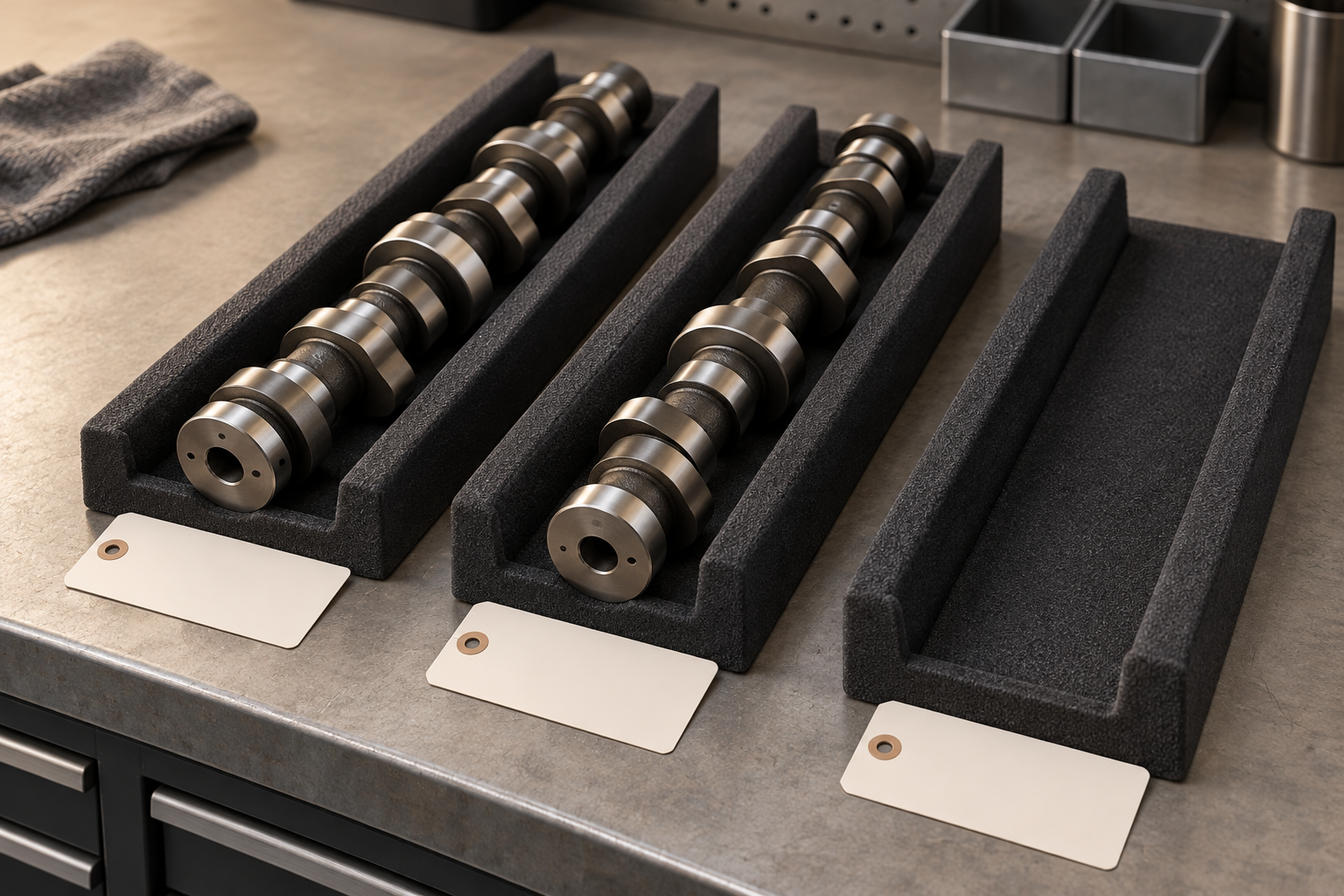
An intake-only purchase can support a job that requires both cams when the correct exhaust cam is already available. That is an inventory allocation, not a recommendation to change the engine's service scope. Count the approved pair first, then identify which member is actually missing.
Keep the complete approved cam configuration with every demand row. A stage label alone is not a pair specification, and excess stock from another configuration cannot erase the shortage.
Preserve the approved pair, not just the stage name
Hot Cams lists intake cams, exhaust cams and intake/exhaust sets, with different stages described in the range. This is evidence of distinct selling forms, not advice on power upgrades or proof that any two same-stage cams form an acceptable pair. Hot Cams camshaft formats
Use the technical owner's exact intake and exhaust references, application and configuration record. Preserve any approved mixed-stage relationship exactly as documented; do not impose a same-stage rule or invent permission to mix stages. A commercial set must answer that complete record, not simply display the expected stage number.
Split paired demand into two traceable stock lines
For each authorized job, record the intake requirement and exhaust requirement under the same job ID. Then apply each matching stock line to its corresponding member. The job becomes covered only when both required allocations are supported.
A historical entry called cam set can hide two separately issued references. Reconcile it before estimating which side is being depleted. Do not count a paired issue once as a set and again as separate intake and exhaust demand. Existing reservations for these jobs should retain their parent IDs so neither member covers two jobs.
Compare individual and set proposals
Ask a seller of individual cams to identify the exact member, not merely intake or exhaust for the engine family. Ask a set seller to name both included references and any difference from the approved pair. If only one member matches, the set cannot be marked as full job coverage.
Keep additional cams from a complete-set option as visible surplus. Another configuration's exhaust cam is not useful surplus for these jobs unless a separate responsible approval says so. Compare complete actual offers without inventing a discount, future use or availability of individual supply.
Fictional example: paired work, uneven purchasing
Three fictional approved jobs each require intake I and exhaust E under configuration C. There is one eligible I and three eligible E available to these jobs. Existing stock therefore covers one complete pair, with the other two exhaust members already allocated to their respective jobs.
Two exact I cams would close the remaining gap if a current individual offer is confirmed. Two I/E sets would also supply the missing intakes but leave two additional E cams after all three jobs. Those extras do not make the set offer cheaper or better without an actual commercial comparison.
If a seller offers two intakes from configuration D, their intake label does not close the C shortage. Keep that proposal outside coverage pending its own technical decision. Purchasing should not revise the exhaust allocations to manufacture a new pairing.
Reorder worksheet
Use this original purchasing aid with the actual approved records. It does not supply a test, installation method or technical acceptance.
| Field | Record and decision basis |
|---|---|
| Engine configuration | Actual application and configuration authority |
| Approved cam relationship | Exact approved intake/exhaust relationship; stage alone insufficient |
| Intake demand | Required intake reference and outstanding quantity |
| Exhaust demand | Required exhaust reference and outstanding quantity |
| Approved-configuration stock | Stock matched to each approved member and job |
| Offered set contents | Both references, offered quantity and member-specific remainder |
Request the identified replenishment
See Dirt bike parts for category context. In a Motoparts sourcing request, identify the approved product, outstanding quantity and exact supplier question. Motoparts provides independent aftermarket and unbranded buying coordination and supplier negotiation. Named manufacturer examples are documentary references, not branded supply offers, affiliations or evidence of another supplier’s capability.
The initial form supports a supported-marketplace HTTPS link, an 8–1200-character description or screenshots. Image limits are five PNG, JPEG, WebP or GIF files, 10 MiB each and 20 MiB combined. PDF, CAD and ZIP files require a separately agreed authorized exchange. A request supplies no engineering approval, guaranteed saving or delivery commitment.
Frequently asked questions
Can I buy only intake cams for paired jobs?
Yes, as a purchasing scope when the exact approved exhaust members already cover the same jobs and the intake offer is confirmed. This does not recommend a partial service operation or change the approved cam configuration.
Does the same stage number establish a compatible pair?
No. Use the exact relationship approved for the application. Preserve a documented mixed-stage pairing if one exists, but do not infer compatibility from a stage name or create your own pairing.
How do I count a set that includes the wrong exhaust cam?
Retain the actual two-member composition and its unresolved difference. It is not complete coverage for the approved pair. Any use of one member or acceptance of the other requires the relevant scope decision.
Are individual cams automatically the economical choice?
No. They may produce less surplus in a particular allocation, but compare actual complete offers and terms. The source’s separate listings do not promise current individual availability or savings.