Motorcycle bodywork RFQ: specify panels, color and finish
Turn a generic bodywork request into a component schedule and a physical-reference sample brief that suppliers can answer line by line.
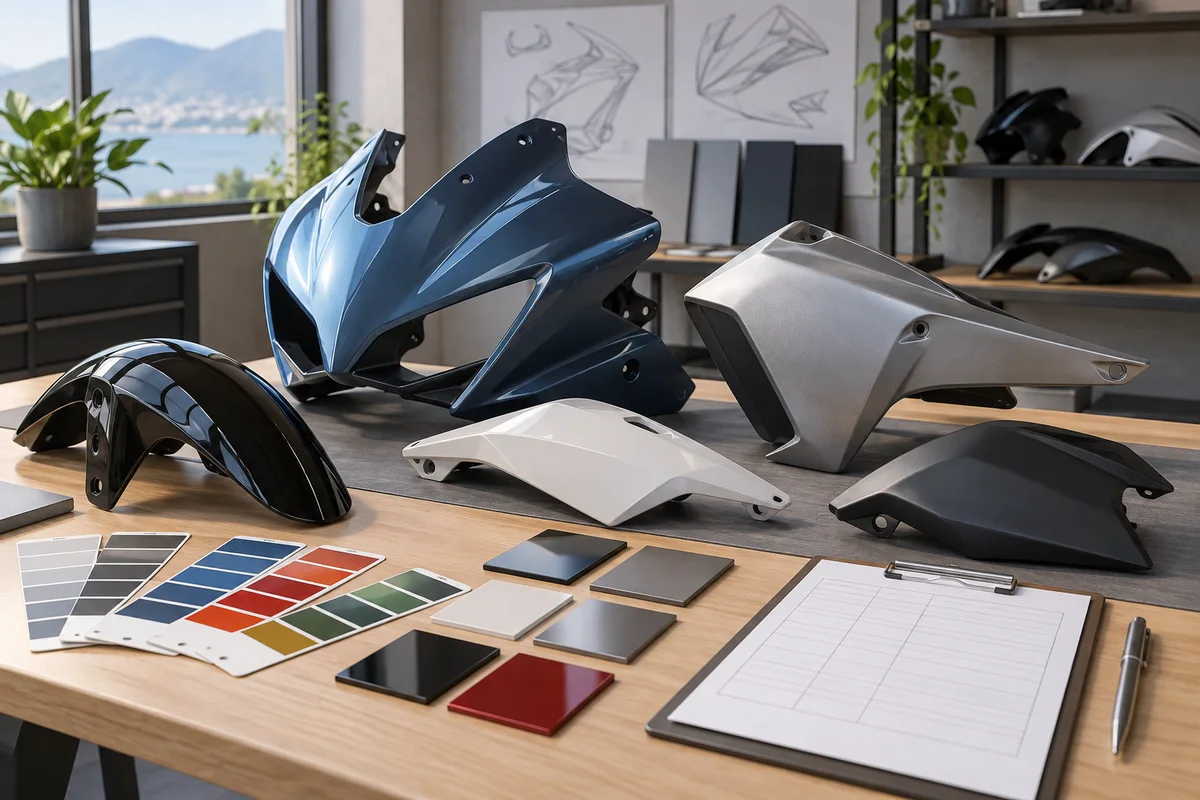
A useful motorcycle bodywork RFQ defines the exact panel or kit, its material and finish, a physical color reference, and the sample approval process. “Black plastics for a 125 cc bike” is a search description, not a specification another buyer can verify.
This guide covers decorative panels and covers. It excludes structural parts, protective equipment and installation instructions. Even decorative bodywork needs an application review to address correct retention and interference with the vehicle.
Identify every panel before discussing color
Specify the actual manufacturer and model, build or model year, market version and relevant modifications. Use the manufacturer's part reference or an authorized drawing where available. Label photos as left or right and inside or outside. Mark the mounting points and any clearance questions that a competent fitter needs to resolve.
For a kit, supply a component schedule identifying each panel, its quantity, supplied grommets or hardware, and exclusions. A photo of the whole motorcycle does not prove that every visible panel is included in the quote.
Keep the supplier SKU beside your own panel ID. Ask the supplier to confirm the item actually being offered; another generic photo of the same type is not enough.
Ask the supplier to declare material and finish
Distinguish molded color, painted finish, printed decoration and removable graphics. Ask which material is offered, whether the finish comes from molding or a separate process, and which faces receive it. Do not assume a glossy photo reveals the polymer or paint system.
Record gloss or texture requirements using an approved physical reference or an agreed measurement method. Words such as “matte,” “satin” and “high gloss” help start the conversation but can be interpreted differently. If quantitative limits are needed, have a suitable specialist define the method and tolerance; an arbitrary number is not a useful acceptance limit.
Have the supplier list any departure from your specified finish in a separate proposal, including its effect on price and lead time.
Use photographs for identification and physical references for appearance
A listing photograph can show panel layout or obvious defects, but it is a weak final color reference. X-Rite explains that even profiled monitors may not match, including when their backlighting differs. That supports treating a screen image as a communication aid rather than the sole approval standard. X-Rite monitor guidance.
Keep a physical sample or choose a precisely identified physical color standard that suits the surface. Assign a reference ID and note which surface area controls the comparison. When using a color code, specify its reference system and finish. Do not make up an official paint code from the seller's color name.
An aged panel may help describe the look you want, but it may no longer show its original color. Specify whether the target is the current physical panel, a new factory reference or another approved finish.
Agree how the sample will be viewed
Define lighting, background and viewing procedure with the supplier. X-Rite's visual evaluation guidance explains that lighting affects perceived color and that neutral viewing surroundings help evaluation. Use consistent conditions when comparing the approved reference with a candidate; changing the room between reviews can change the apparent match. X-Rite visual evaluation guidance.
Note the appearance decision and any open fitment questions. Visual approval of a sample does not establish mounting suitability, resistance to service conditions or installation safety.
Define visible defect zones
Mark the primary visible faces, edges and normally hidden faces on a drawing or photo. Agree how scratches, paint runs, uneven texture and decoration alignment will be evaluated. Use labelled example photos where helpful, but do not accept unexplained cracks or broken mounting features just because they are hidden.
Require the sample to arrive in the proposed protective packing, and include its surface condition after unpacking in the evaluation. Note the SKU, date, material and finish declaration, and manufacturing status. A development sample may differ from current-stock production.
Keep the approved physical sample securely identified. Record whether it approves appearance only or also specific, separately reviewed dimensions. Avoid a single ambiguous “approved” message.
Compare kit quotes with the same contents
Hypothetical example: your schedule requires 1 left panel, 1 right panel and 1 center cover per kit. An order for 20 kits therefore contains 60 panels. Quotation A includes all three panels plus graphics; quotation B includes all three panels without graphics. They are different scopes until the graphics requirement is aligned, even if both offers say “complete kit.”
Ask for a price per approved kit, panel count per kit, spare-panel availability, inner-pack labels and carton quantities. Never interpret “20” as both kits and panels in different documents.
Send a reviewable RFQ
Application: [model / year / market / unresolved questions]. Buyer panel IDs and supplier SKU: [schedule]. Requested quantity: [kits or panels, with contents]. Material and finish: [required specification or supplier declaration requested]. Appearance reference: [physical sample ID / reference system]. Viewing method: [agreed conditions]. Visible zones: [marked file]. Graphics and hardware: [included / excluded]. Please confirm each field, list deviations separately, and quote a sample with protective packing before bulk release.
Ask the supplier to respond using the same fields. Show later changes to material, color, finish or kit components in a new revision, keeping the original record intact.
For broader application questions, read the dirt-bike parts guide. For supplier evidence, use supplier checks. Attach the component schedule and sample brief to the sourcing form when requesting a purchase quotation.