Compare motorcycle-parts quotes: pieces, bags, pairs and kits
Normalize supplier quotes to the same defined contents before comparing price, pack multiples or carton quantities.
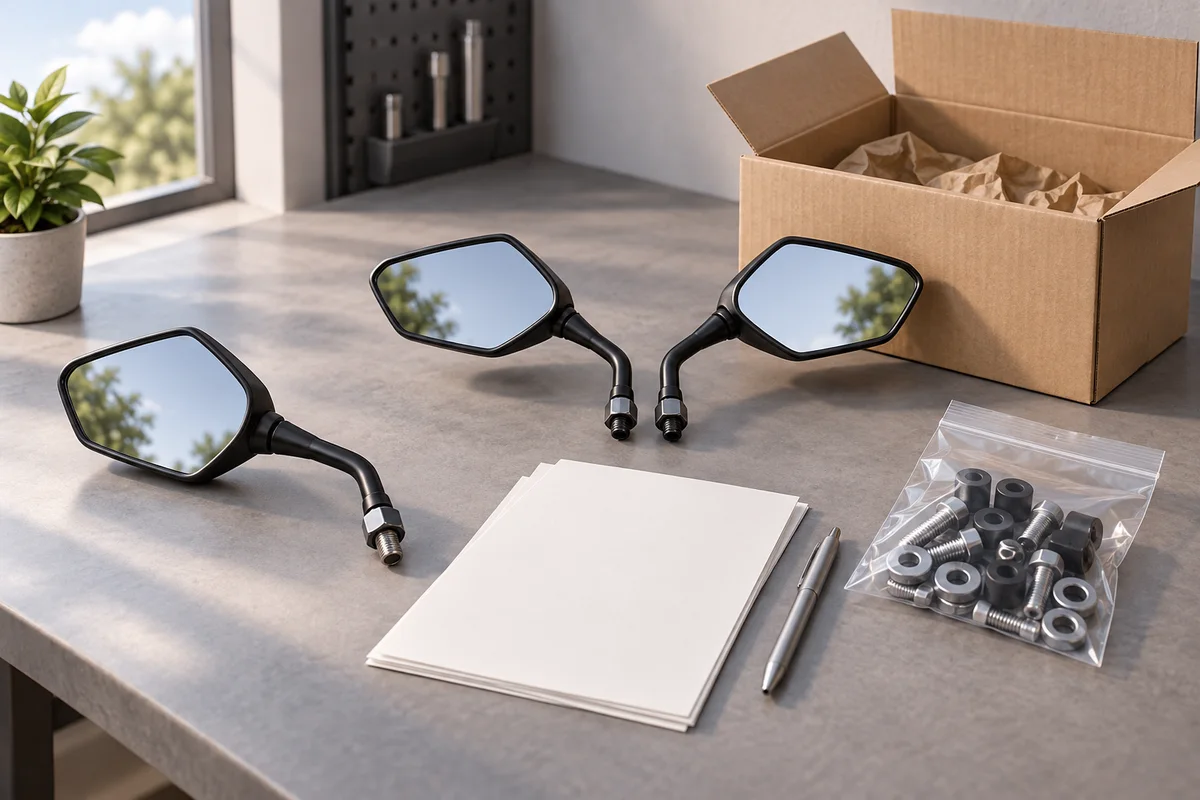
Before comparing motorcycle-parts quotes, define one orderable unit for every SKU and list what it contains. Convert every quotation to that same unit, then keep pack multiples and carton quantities in separate fields. A cheaper price per “set” has little meaning until the set is defined.
This workflow solves a commercial and receiving problem. It does not prove that the quoted parts fit a motorcycle or that a selected kit is suitable for a repair.
Write the unit in words and numbers
For each line, record the supplier SKU, your buyer ID, specification revision, requested quantity and unit. Add the number of physical pieces inside that unit. If the order is a bag, write “one bag containing 10 identical clips,” rather than “one pack.” If it is a kit, attach a component schedule instead of relying on a headline count.
Seller terminology is not a contract definition. Piece, pair, set, pack and carton can describe different things in different quotations. Translate terms where needed, but ask the supplier to confirm the contents numerically. A pair of left/right decorative caps differs from two identical left caps even though both contain two pieces.
Keep the ordered unit visible in the purchase order, supplier confirmation, inner label and packing list. Do not switch silently from bags in the quote to loose pieces in the warehouse record.
Distinguish the product unit from its packaging levels
Use separate fields for pieces per orderable unit, orderable units per inner pack, inner packs per carton and total cartons. Not every supplier uses every level; blank fields should be explained rather than filled with guessed conversions.
GS1 requires new identification at the relevant higher packaging levels when case quantity changes, and a new GTIN when a predefined assortment's composition changes. These rules apply when using the GS1 system; they do not show that a marketplace seller uses it or that a barcode proves authenticity. GS1 GTIN Management Standard, sections 2.8 and 2.9.
Even without GTINs, maintain your own clear SKU and pack-version record. Ask the seller to identify a changed count or changed kit component before accepting a repeat order.
Normalize quotes before ranking them
Hypothetical example: a workshop wants 24 refill bags, each containing 10 approved decorative clips. The requirement is 240 pieces. Supplier A quotes 12 currency units per bag; Supplier B quotes 1.10 currency units per piece and requires orders in multiples of 50 pieces. These are invented arithmetic inputs, not market prices.
| Comparison | Supplier A | Supplier B |
|---|---|---|
| Required quantity | 240 pieces | 240 pieces |
| Purchasable quantity under stated terms | 24 bags / 240 pieces | 250 loose pieces |
| Product subtotal | 24 × 12 = 288 | 250 × 1.10 = 275 |
| Pieces beyond the stated requirement | 0 | 10 |
B's lower product subtotal does not complete the comparison. Its quote has not yet provided 24 labelled refill bags. Ask for the cost of counting, bags and labels, plus any relevant inspection and packing differences. Do not compare B's loose-piece price with A's bagged price as though their delivered scope were identical.
The extra 10 pieces should be recorded as surplus inventory, not treated as a saving equal to an assumed future sale. Whether they have value depends on actual use and storage plans.
Freeze the contents of a kit
Give each component a row with its own ID, description, quantity and approved revision. State which hardware, seals, graphics or instructions are included, where relevant. A supplier may propose alternatives, but a substitution should remain a visible deviation until approved.
For a repeat order, ask the supplier to confirm that the contents, material and finish declaration, and packaging quantity are unchanged. If the supplier has changed the kit, request a new component schedule and review it before relying on the old price comparison.
Technical interchangeability is a separate matter. A kit can have the right piece count and still contain the wrong variants.
Send a unit-confirmation message
Buyer ID / supplier SKU: [IDs]. Approved revision: [reference]. Requested orderable unit: [one bag / pair / kit / individual piece]. Contents per unit: [count and component schedule]. Requested quantity: [number of units and equivalent pieces]. Please state the quoted unit, price per unit, minimum per SKU, order multiple, inner-pack quantity and carton quantity. Mark missing contents or substitutions separately. Confirm that labels and the final packing list will use this same definition.
Ask for a corrected quotation if the reply changes the unit. Retain both versions so the reason for any change in the total price remains visible.
Reconcile the order at receiving
Count the cartons first, then the inner packs and their declared contents. Record actual loose-piece counts when the agreed receiving plan requires them. Sampling selected packs cannot establish the count in every unopened pack, so be precise about what was checked.
Distinguish missing units from incomplete units. If an ordered kit is missing a component, record an incomplete kit and identify the missing component. Do not mark the whole kit as absent and also deduct that component from another total.
Hold unidentified or substituted contents for review. Let the respective decision owners handle quantity release and technical acceptance; a correct carton count cannot settle both.
Carry the normalized record into the cost comparison
Once the unit and delivered scope are aligned, add domestic collection, inspection, packing and the quoted transport and destination costs that apply. Use the workshop consumables cost guide for the broader local-versus-import decision. Use supplier checks to document the exact offered variants.
A good quote comparison defines the quantity, product and packaging. Purchasing and receiving can then work from a consistent record.