
Motorcycle Wheel Receipt: Keep Rim Dent Assessment Open
Separate a price credit for wheel appearance from a competent assessment of an identified rim dent and the actual affected unit.
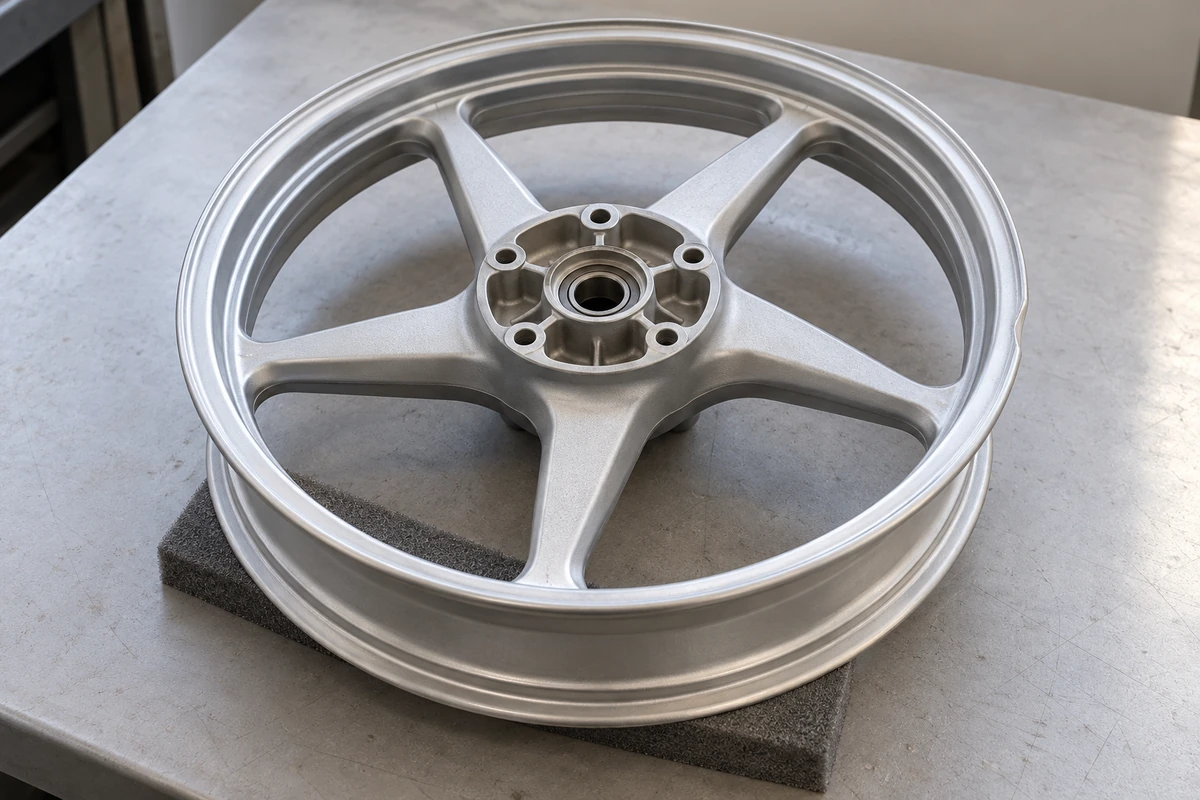
A cosmetic-credit offer does not resolve the technical significance of a motorcycle rim dent. Record the deformation concern, identify who can assess it and keep that decision separate from the negotiated remedy. Purchasing should not describe a dent as harmless merely because the seller offers a discount.
This article concerns the received wheel’s visible rim condition. It does not specify wheel geometry, set runout limits or provide mounting, truing or repair instructions.
Locate the concern on the actual wheel
Start with the exact order line and delivered wheel reference. Keep an available whole-wheel image associated with the detail that prompted the report. Describe the location using an identifiable feature in that view so the supplier does not answer about another edge or a different unit.
Distinguish a surface-finish mark from an apparent change in rim shape. If the image does not establish which is present, record that uncertainty rather than calling the mark a confirmed dent. Avoid inferring hidden cracking, tire-bead condition or the cause of an event from one photograph.
When several wheels arrived together, retain separate identities. A photograph of an unaffected-looking wheel cannot answer the reported condition of another. If the receipt process lost that association, record the traceability gap and ask how it can be resolved without assuming every wheel shares the same condition.
Why the technical question remains separate
Motion Pro’s wheel-maintenance article says a rim dent can have consequences beyond appearance and directs such damage to professional assessment. It is maintenance guidance, not a delivered-wheel tolerance or permission to repair a rim. Motion Pro wheel-condition guidance
The purchasing implication is to retain a competent assessment for the identified concern. Do not use the article to decide a dent’s permissible depth or declare an unknown wheel repairable. Product construction, the actual condition and applicable assessment criteria must be established by the responsible provider.
A clean finish elsewhere on the wheel does not answer the local deformation concern. Equally, an unattractive photograph is not enough to conclude that the wheel has a particular structural failure. The receipt record should be factual enough to support assessment without impersonating that assessment.
Keep the agreed observation scope visible
Record what the receiver was authorized to observe and which existing views are available. If the work was limited to exterior documentation, say so. Do not convert a completed photo set into a comprehensive wheel inspection.
Do not hammer, straighten, mount a tire, apply pressure or adjust spokes to see whether the concern can be removed. Do not invent a spin or runout test from this worksheet. If more information is necessary, the competent provider should establish the appropriate method and responsibility.
Keep original evidence separate from later work. If the supplier says the wheel was adjusted before dispatch, request the actual work record and its relationship to the ordered supply condition. If an intervention has already occurred after receipt, document it without representing the resulting appearance as the original arrival state.
Buyer worksheet
Use one record per identified unit or clearly defined affected group. This is an original purchasing aid, not a test procedure or acceptance standard.
| Field | Record to preserve | Question that remains open |
|---|---|---|
| Wheel unit | Exact delivered identity and whole-wheel evidence | Which unit a detail image actually represents |
| Rim location | Existing detail tied to a stable feature or view | Surface mark versus unclear deformation |
| Visible deformation | Literal observation and visibility limits | Hidden damage, cause or repairability inferred |
| Agreed observation scope | Authorized exterior work and evidence available | Photo completion treated as comprehensive inspection |
| Competent assessment | Issuer, exact unit, applicable basis and restrictions | Sales reassurance without underlying assessment |
| Commercial remedy | Actual proposal, affected unit and conditions | Credit or paint response treated as technical release |
Evaluate the assessment and the remedy independently
Ask the supplier for its response to the identified rim area and for the basis of any proposed disposition. A response that addresses paint or finish only should remain in the appearance record. It should not close the deformation question.
The commercial discussion can record a proposed credit, replacement or other resolution without claiming a technical outcome. Ask which unit the remedy covers and whether the proposal depends on any further assessment. This guide does not establish an automatic right to a refund or a seller’s actual ability to supply a replacement.
Where the technical response comes through a salesperson, retain the underlying assessor, document and scope if supplied. Do not convert “our engineer says okay” into an independent written assessment when no such record has been provided. The gap is a specific next question.
Fictional example: the discount answers price only
Imagine fictional wheel W-09 with an existing receipt image showing an apparent rim-edge dent. The seller proposes a cosmetic discount and says the paint can be touched up. No actual product condition, repair or seller policy is represented here.
The buyer records the offer while keeping the dent assessment open. It asks whether the supplier’s response actually addresses the visible deformation and requests the responsible technical assessment for W-09. It does not authorize touch-up or straightening as an implied condition of receiving the credit.
If a later assessment addresses only the finish mark, the deformation question remains unresolved. If a replacement is agreed, it receives its own identity and receipt record. Neither the credit nor replacement paperwork should retroactively label the first wheel safe for service.
Write a closure that preserves scope
An appropriate record names the observation, evidence, assessor and actual decision, with the commercial remedy beside it. Use the precise permitted action and conditions from the responsible response. Avoid “wheel approved” when the document merely acknowledges a cosmetic issue.
This separation protects the purchasing record from an easy but misleading shortcut: treating a lower price as a technical answer. The buyer can negotiate clearly while leaving wheel-condition decisions with the appropriate competent owner.
Keep the request tied to the received item
Use the Dirt bike parts category for product context and the Motoparts sourcing request for the exact received reference and unresolved supplier question. Motoparts provides independent aftermarket and unbranded buying coordination and supplier negotiation. The manufacturer example above is documentary evidence, not a branded-goods offer, affiliation, inspection-service promise or engineering approval.
The sourcing form supports a supported-marketplace HTTPS link, an 8–1200-character description, or one or more screenshots. Image limits are five PNG, JPEG, WebP or GIF files, 10 MiB per file and 20 MiB combined. It does not accept PDF, CAD or ZIP uploads. Arrange other technical files only through a separately agreed, authorized exchange.
Frequently asked questions
Does accepting a cosmetic credit clear a rim dent?
No. A credit concerns the commercial resolution. Keep the identified deformation concern and the competent assessment separate; do not interpret the price adjustment as a technical release.
Can a receiving photograph determine whether a rim is repairable?
It can locate and describe a visible concern, but this guide provides no repairability criteria. The exact wheel and damage require assessment by an appropriate professional using applicable evidence.
Should I mount or spin the wheel to prove the dent matters?
No such test is authorized here. Preserve existing evidence and the agreed observation limits. Any additional physical assessment needs an appropriately competent method and responsible authorization.
What if the seller only discusses damaged paint?
Record that as an answer to the finish question and ask separately about the reported deformation. A response to paint condition should not close a rim-shape concern it does not address.
Sources
Discuss a sourcing request related to this article.Motorcycle Wheel Receipt: Keep Rim Dent Assessment Open