
Control Cable Receipt: Separate Dry Supply and Damage
Record cable housing and end-fitting concerns independently of the supplied lubrication state so the supplier answers the actual receipt issue.
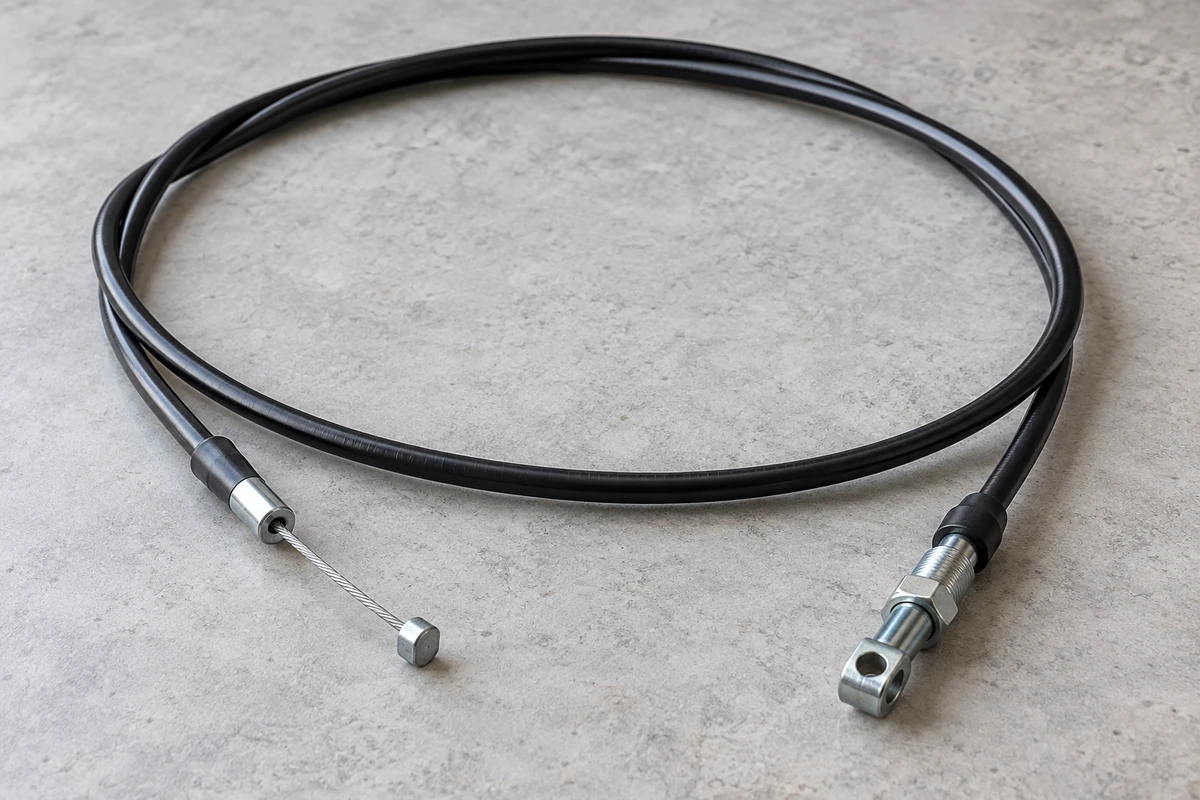
A statement that a replacement control cable ships dry does not answer a report about a damaged adjuster fitting. Keep the declared lubrication state and each visible housing or fitting concern on separate lines. That lets a buyer accept a relevant explanation without accidentally closing a different issue.
The cable in this guide is already specified. Its length, route, control adjustment and operating behavior are outside the receipt question, and no actuation or lubrication procedure is provided.
Identify the delivered cable and the stated supply condition
Retain the full order reference and the seller’s supplied product designation. Record which cable the condition report concerns, including the relevant end or housing region from existing evidence. A mixed shipment should not become one generic “cable problem” if only one identified unit has a reported fitting concern.
Find the order’s lubrication description or ask the supplier to state what was supplied. If the agreement is silent, mark it silent. Do not assume all cables must arrive visibly lubricated or that all replacement cables necessarily ship dry.
Keep the source of the declaration visible. A product-specific instruction, a dispatch note and a sales reply are different records. If they disagree, request a clarification for the exact delivered reference rather than selecting the description that makes the discrepancy easiest to close.
Use the maintenance example without copying a procedure
Motion Pro’s Cable Maintenance 101 discusses new replacement-cable lubrication and separately identifies worn housings and damaged fittings as condition concerns. This establishes that lubrication and physical condition are distinct subjects. It does not create a universal new-cable rejection rule or authorize treatment of an unknown cable. Motion Pro cable-maintenance guidance
The relevant purchasing inference is narrow: an explanation about supplied lubrication cannot by itself resolve a fitting or housing observation. The source’s removal, adjustment, tool and lubrication instructions are not part of this receipt worksheet. The actual product’s preparation and installation requirements belong with the responsible competent provider.
Describe the housing and fittings separately
Use an existing whole-cable view to locate the reported area, then associate any available detail image. Name the visible object and feature: housing surface, end fitting, adjuster body or another identified component. Avoid replacing that description with a diagnosis of internal wire condition.
A scratch on an outer surface, an apparent split at a fitting and a supplier’s statement about dry supply should remain different entries. Do not infer that a housing is undamaged throughout because one portion looks tidy. State which views were available and which areas were not assessed.
Do not pull the inner wire, cycle the cable, bend it to expose a mark, tighten a fitting or apply lubricant to see whether the concern disappears. Those actions would create a new intervention rather than clarify the original documentary report. Where a physical assessment is needed, request a competent, authorized method for the actual cable.
Buyer worksheet
Use one record per identified unit or clearly defined affected group. This is an original purchasing aid, not a test procedure or acceptance standard.
| Field | Record to preserve | Question that remains open |
|---|---|---|
| Cable unit | Order and delivered designation, unit and end identity | Mixed units grouped under one unsupported conclusion |
| Declared supply lubrication | Product-specific declaration and order requirement | Dry supply assumed for every cable |
| Housing observation | Existing view and precise exterior location | Internal condition or unseen regions inferred |
| End-fitting observation | Fitting identity and separate detail reference | Lubrication answer used to close physical damage |
| Evidence before treatment | Arrival record and any known intervention history | Actuation or lubricant added to recreate a result |
| Supplier answer | Response mapped to each individual concern | Generic preparation advice mistaken for disposition |
Check whether the reply answers the right row
A useful supplier response identifies the supplied lubrication state and addresses the located housing or fitting concern independently. If the reply says only that preparation is required before use, preserve it in the lubrication row and leave the physical-condition row open.
Ask the supplier to state whether it disputes the observation, needs different existing evidence, or proposes an authorized assessment or replacement. This is more precise than asking whether the cable is “good.” A new general product photograph should not replace an answer about the received unit.
If the seller claims the observed feature belongs to the design, request the exact applicable construction reference. Keep a design explanation distinct from an acceptance decision. A matching design detail would not establish the condition of another damaged area or the functioning of the complete control assembly.
Fictional example: a dry-supply reply to a fitting concern
Imagine fictional cable C-32 arriving with an existing detail image that appears to show a damaged adjuster fitting. The supplier replies that new cables are supplied without lubricant. The buyer has not reported a lubricant shortage, and no real cable or seller is represented in this example.
The buyer records the dry-supply declaration, then repeats the specific fitting question with the unit and image reference. It does not add lubricant, attempt to operate the cable or accept a discount as evidence that the fitting can be used. The technical concern remains assigned to the appropriate provider.
If the supplier proposes replacement, ask for the exact replacement reference and which affected unit the proposal covers. If it proposes repair, retain that as a proposal pending the required technical assessment and authorization; the receipt report is not permission to undertake the work.
Preserve the difference between agreement and readiness
A commercial resolution can settle what the supplier will do without establishing cable function. Record both the agreed remedy and the still-applicable technical status. Avoid an unqualified “passed” label when only the lubrication description has been clarified.
The final receipt file should make it easy to see which concern was answered, by whom, and for what unit. It should not conceal a damaged-fitting question inside a general instruction to prepare new cables before use.
Keep the request tied to the received item
Use the Dirt bike parts category for product context and the Motoparts sourcing request for the exact received reference and unresolved supplier question. Motoparts provides independent aftermarket and unbranded buying coordination and supplier negotiation. The manufacturer example above is documentary evidence, not a branded-goods offer, affiliation, inspection-service promise or engineering approval.
The sourcing form supports a supported-marketplace HTTPS link, an 8–1200-character description, or one or more screenshots. Image limits are five PNG, JPEG, WebP or GIF files, 10 MiB per file and 20 MiB combined. It does not accept PDF, CAD or ZIP uploads. Arrange other technical files only through a separately agreed, authorized exchange.
Frequently asked questions
Is an unlubricated replacement cable automatically defective?
No universal conclusion is supported here. Establish the exact product’s declared supply state and order requirement. Keep any independent housing or fitting concern open even when dry supply is documented.
Can lubrication resolve a damaged-fitting report?
A lubrication explanation does not assess a fitting’s physical condition. Preserve the identified observation and ask for a product-specific response. Do not treat the cable to make the original report disappear.
Should I pull the inner wire to check the cable?
This receiving worksheet does not authorize actuation or a functional test. Use existing observations and refer any additional assessment to an appropriately competent provider under an agreed scope.
What if the seller says the fitting feature is normal construction?
Request the actual model’s construction evidence and a response to the precise location. A design explanation may clarify that feature, but it does not establish complete cable condition or control-system readiness.
Sources
Discuss a sourcing request related to this article.Control Cable Receipt: Separate Dry Supply and Damage