
Disassembled Motorcycle Bundles: Review the Whole Import Scope
List the contents of the whole motorcycle bundle and obtain a US import-scope assessment before booking it under a generic parts description.
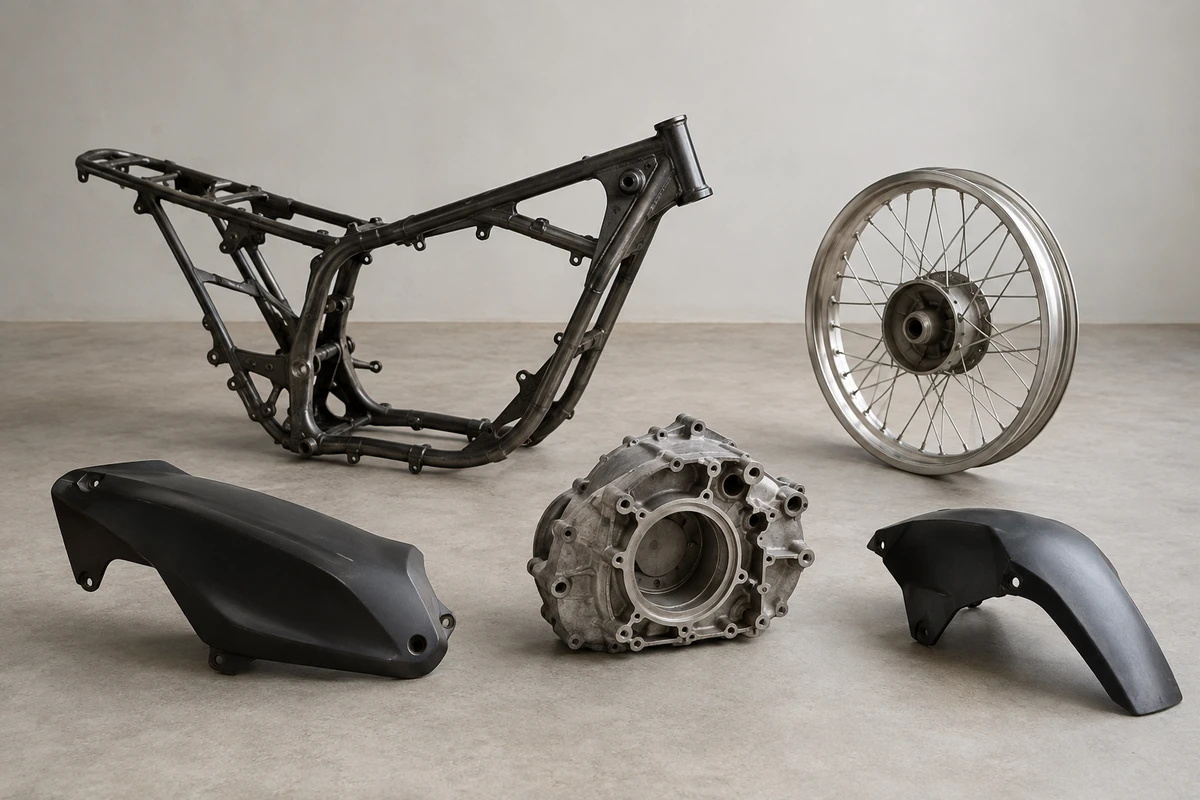
Do not book a disassembled motorcycle bundle as miscellaneous parts just because the photos show no complete motorcycle. For a US-bound shipment, have the responsible importer review the whole assemblage, including its engine and power train, before relying on a parts-only freight scope.
Taking it apart changes its physical presentation; it does not allow purchasing to determine the shipment's legal identity. You need a complete commercial inventory and an import assessment attributable to its reviewer, not a convenient box title.
Build one inventory across all packages
Request the full offered contents from the seller, including any engine, transmission or other drivetrain components outside the photographed frame group. Relate each item to its intended package and order line. An extra crate is still part of the factual enquiry if it belongs to the same offer.
Preserve the available vehicle identity, original application and source documents without adding a false history. Clearly distinguish established facts from the seller's assertions. A description such as donor bike or restoration lot cannot replace the contents list.
Give the importer and the transport provider the same inventory. If the seller adds a component after the first enquiry, provide a revised list so the adviser is not left assessing the earlier, smaller bundle.
Understand why loose components may still form a larger scope
For vehicles originally manufactured for on-road use, NHTSA's US import FAQ explains that a disassembled assemblage shipped with its engine and power train counts as a motor vehicle for import purposes, even if those components are not installed. It distinguishes vehicles not primarily manufactured for public-road use, so do not generalize the on-road finding to all off-road motorcycle bundles. Its equipment discussion also shows that obligations for individual regulated equipment items may apply. This limited finding was checked on 14 October 2026; it does not decide the eligibility of your goods. NHTSA importation and certification FAQs
Have the competent importer or adviser evaluate the actual contents and supporting records. Ask for the reasoning behind the answer and any further evidence or official determination needed. A photo of a bare frame does not prove an equipment-only shipment if the seller is also supplying a separate engine crate.
This does not encourage splitting the shipment, removing components or changing its description to avoid requirements. If the purchased scope genuinely changes, present the new facts in full and request a fresh assessment. Merely revising paperwork without a physical change to the commercial supply does not make it a different supply.
Keep the quote tied to the whole-shipment answer
A provider might offer transport before the import questions are fully resolved. Label that estimate with the inventory revision and outstanding assessment, rather than presenting it as a bookable landed offer. Clarify which quoted services depend on the final scope and who will coordinate the required records.
Once an answer is available, reconcile the commercial description, importer's review and freight basis. Ask the provider to identify changes to its services and the actual charges. Avoid assigning a standard vehicle fee or guessing the clearance time; neither is established by the public FAQ.
Agreeing a transport scope does not establish road registration, product compliance or permission to assemble and use the goods. Leave those subsequent requirements with the appropriate responsible parties.
Fictional example: the drivetrain is on another page
A fictional seller's first packing page covers a motorcycle frame and loose body parts; the second covers the engine and power train. The freight enquiry includes only the first page and describes the offer as a parts lot.
The buyer puts both pages together into a complete inventory and requests an import review of the full proposal. It records which items are installed and which are packed separately without treating that arrangement as a legal determination. The original quote is flagged as incomplete in scope, rather than assumed to be wrong in price.
If the adviser needs further identity evidence, the buyer obtains it from the seller or other attributable records. It does not fill gaps by visual resemblance. The buyer can assess the defined commitment only when the import assessment and quote refer to the same inventory.
Before release, ask the seller to confirm the final contents against the reviewed inventory revision. Refer any newly added engine, changed frame or omitted document back to the responsible reviewer. The aim is a complete and consistent description of the actual purchase.
Buyer worksheet
| Record | What to establish |
|---|---|
| Complete assemblage | All offered contents across every package |
| Vehicle evidence | Available identity and application records with gaps retained |
| Engine and power train | Actual inclusion and installed/separate state |
| Import review | Named reviewer, assessed inventory revision and open conditions |
| Freight basis | Current offer matched to the whole reviewed scope |
| Final declaration of contents | Seller confirmation and changes referred back |
This is an original worksheet for purchasing. It does not give authority for doing physical work, define legal treatment, or substitute for a provider's assessment.
Bring the unresolved decision to the right provider
For product context, visit Motorcycle parts. Use a Motoparts sourcing request to identify the exact item and the supplier question that still needs an answer. Motoparts coordinates independent aftermarket and unbranded purchasing and negotiates with suppliers. The companies cited above are documentary examples only; mentioning them implies no affiliation, offer of branded products or promise that Motoparts provides their services.
The initial form supports a marketplace HTTPS link from a supported site, an 8–1200-character description, or up to five screenshots in PNG, JPEG, WebP or GIF format. The limits are 10 MiB each and 20 MiB combined. Any other files require a separately agreed, authorized exchange. This form does not accept PDF, CAD or ZIP uploads.
Frequently asked questions
Does disassembling a motorcycle make it an ordinary parts shipment?
Disassembly alone does not support that conclusion. NHTSA’s US FAQ discusses assemblages of vehicles originally manufactured for on-road use with an engine and power train, and considers originally off-road vehicles separately. Have the responsible importer evaluate the complete proposal and its original application.
Should the engine crate be omitted from the bundle review?
No. Include the engine and anything else actually being supplied, even if packed separately. Your adviser needs to see the proposal as a whole, rather than one selected photo or a single packing-list page.
Can I divide the shipment to obtain a different import description?
This article does not grant permission to split a shipment or remove components to bypass requirements. Accurately describe any genuine change to the purchase and request the appropriate assessment. Do not hide the original commercial facts.
Does a reviewed import description establish road-use approval?
No. The review addresses the stated import question. Road registration, product compliance, technical condition and safe assembly or use remain separate responsibilities.
Sources
Discuss a sourcing request related to this article.Disassembled Motorcycle Bundles: Review the Whole Import Scope