
Engine Service Freight: Match the Shipment to the Accepted Components
An engine-work quote may cover components instead of the whole engine. Confirm the agreed intake and return scope before purchasing freight.
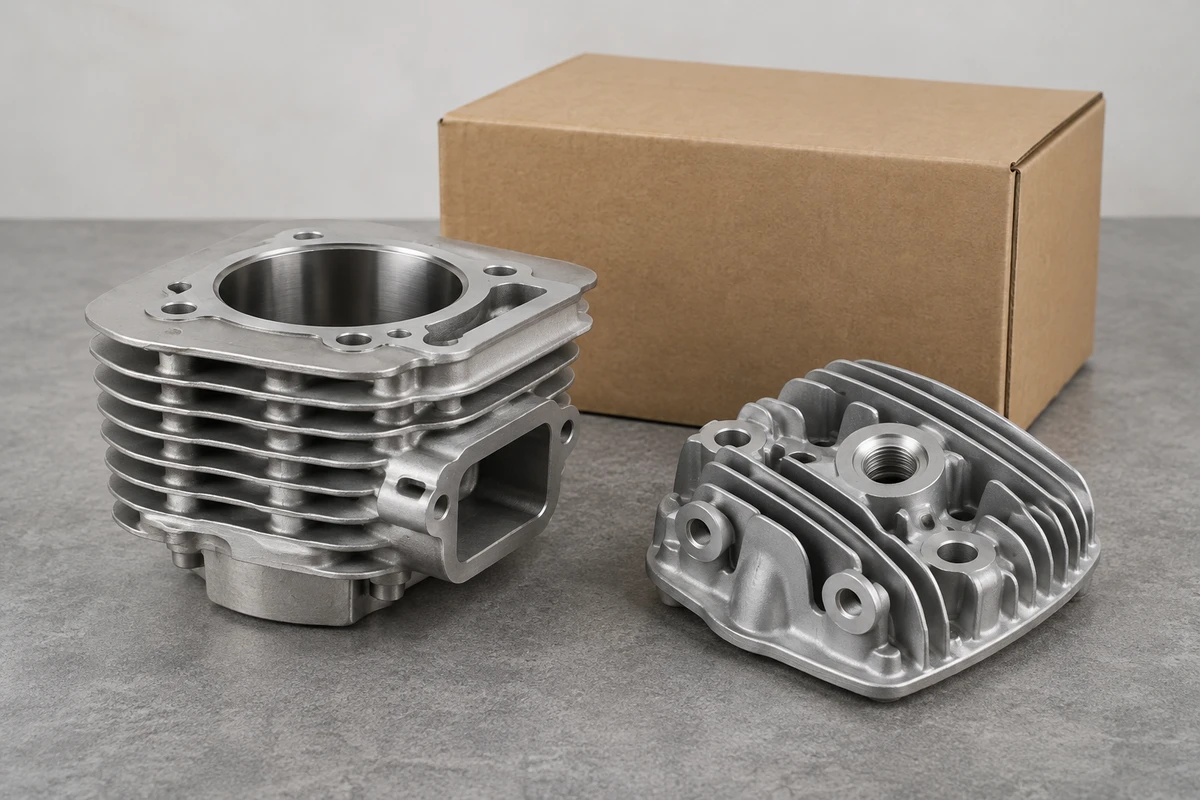
Before booking freight for motorcycle engine work, find out whether the service provider expects a whole engine or a defined set of components. The estimate may describe the work without specifying the physical assembly the shop will accept.
Sort this out before moving the engine from its current location. Purchasing should not coordinate an unapproved teardown or ship a larger assembly hoping the receiving shop will dismantle it on arrival.
Compare the job description with the intake list
Use the actual service request to identify the proposed work and the component references the shop needs. Keep the whole-engine identity as context, then list the specific goods the shop has agreed to consider. A general heading such as engine upgrade cannot replace that list.
Race Tech's shipping instructions exclude complete engines from the described component intake. This shop-specific boundary was checked on 14 October 2026; it does not define another provider's service scope. Race Tech suspension and engine component shipping
Have the actual recipient confirm the proposed intake in writing. If it accepts only named components, ask which existing records establish their identities and how to reference them in the job. Do not assume the required contents from a service photograph or send additional assemblies simply because they belong to the same engine.
Assign the work that occurs before the freight leg
A components-only offer may leave a separate professional job at origin. Ask the responsible workshop to define the required work, authorization, intended output and price. This article provides no method for dismantling an engine, preparing fuel-contact parts or selecting the components needed.
Keep that professional-work decision separate from the receiving shop's intake response. The shop may accept a component without doing the work needed to produce that shipment from the owner's current assembly. A freight provider's collection offer does not resolve that gap either.
Record the condition and identity declared by the origin provider for the proposed shipment. Give the actual transport provider an accurate description of the resulting scope for its independent assessment. Do not reuse an old complete-engine crate weight or description in the new quote without confirmation.
Account for what stays behind
The components sent to the service shop are only part of the owner's property. Ask the responsible origin provider to list what remains in its custody and which later work, if any, falls within its accepted scope. The record should not say the engine is back when only one serviced component has reached the origin workshop.
Identify the return recipient. This may be the workshop responsible for the next authorized stage rather than the owner's address. Get the recipient's agreement and accurate details before comparing return freight. Do not expect a complete reassembled engine back from a shop that received only components.
If the buyer later requests broader service, obtain a new accepted scope. Adding a part, changing the receiver or returning directly to the owner may change both the professional handover and the freight proposal.
Fictional example: a cylinder-head job priced as a whole engine
A fictional owner has a complete E-30 engine at a local workshop. An overseas provider offers to assess specified cylinder-head components, but the buyer's first freight enquiry refers to the entire engine. The offers describe different physical movements.
The buyer has the service provider confirm the component intake and obtains a separate offer from the origin workshop for authorized work and custody. The buyer does not instruct a warehouse packer to dismantle E-30. The transport enquiry is updated solely from the resulting provider-defined shipment record.
On return, the job file records receipt of the serviced component separately from later work on E-30. If that later work was never quoted, its commercial and technical scope remains open. An apparently inexpensive service journey should not hide an unassigned completion task.
A complete purchasing decision identifies what moves each way, the professional providers at both ends and the property that stays behind. It is not an attestation of the engine's condition or readiness for use.
Buyer worksheet
| Record | What to establish |
|---|---|
| Current assembly | Engine identity and current custodian |
| Accepted intake | Exact components the service shop will receive |
| Origin work | Responsible professional scope, authorization and quoted cost |
| Retained property | Items staying behind and custody record |
| Freight object | Actual resulting shipment record and separate acceptance |
| Return endpoint | Receiving workshop and remaining authorized work |
This is an original worksheet for purchasing. It does not give authority for doing physical work, define legal treatment, or substitute for a provider's assessment.
Bring the unresolved decision to the right provider
Find product context at Motorcycle parts. A Motoparts sourcing request can specify the exact item and the supplier question still unanswered. Motoparts provides independent aftermarket and unbranded buying coordination and supplier negotiation. The companies named above are documentary examples, not affiliations, branded-product offers or a promise that Motoparts provides their services.
The initial form accepts a supported marketplace HTTPS link, a description of 8–1200 characters, or up to five PNG, JPEG, WebP or GIF screenshots. Each image file must be no larger than 10 MiB, with a combined limit of 20 MiB. Other files require a separately agreed, authorized exchange; the form is not a PDF, CAD or ZIP portal.
Frequently asked questions
Does an engine-service quote mean the shop accepts a complete engine?
Not necessarily. Ask for a specific intake list. The Race Tech example excludes complete engines; check the actual terms of any other provider separately.
Who should define work needed before component shipment?
The responsible qualified workshop should propose the work scope and obtain the required authorization. Purchasing should not turn an intake clarification into dismantling or preparation instructions.
Can the original whole-engine freight estimate be reused?
Only when the provider confirms that the estimate covers the actual revised shipment. Component identities, condition and packed data may differ, so keep the previous quote with its original basis.
Does receiving serviced components mean the engine job is complete?
It closes only the described component return. Reconcile the property kept at origin and any separately authorized subsequent work before treating the owner's overall requirement as fulfilled.
Sources
Discuss a sourcing request related to this article.Engine Service Freight: Match the Shipment to the Accepted Components