
Floating Rotor Receipt: Request a Design-Specific Answer
Keep a delivered rotor’s reported joint movement tied to its exact design instead of accepting a generic floating-disc explanation.
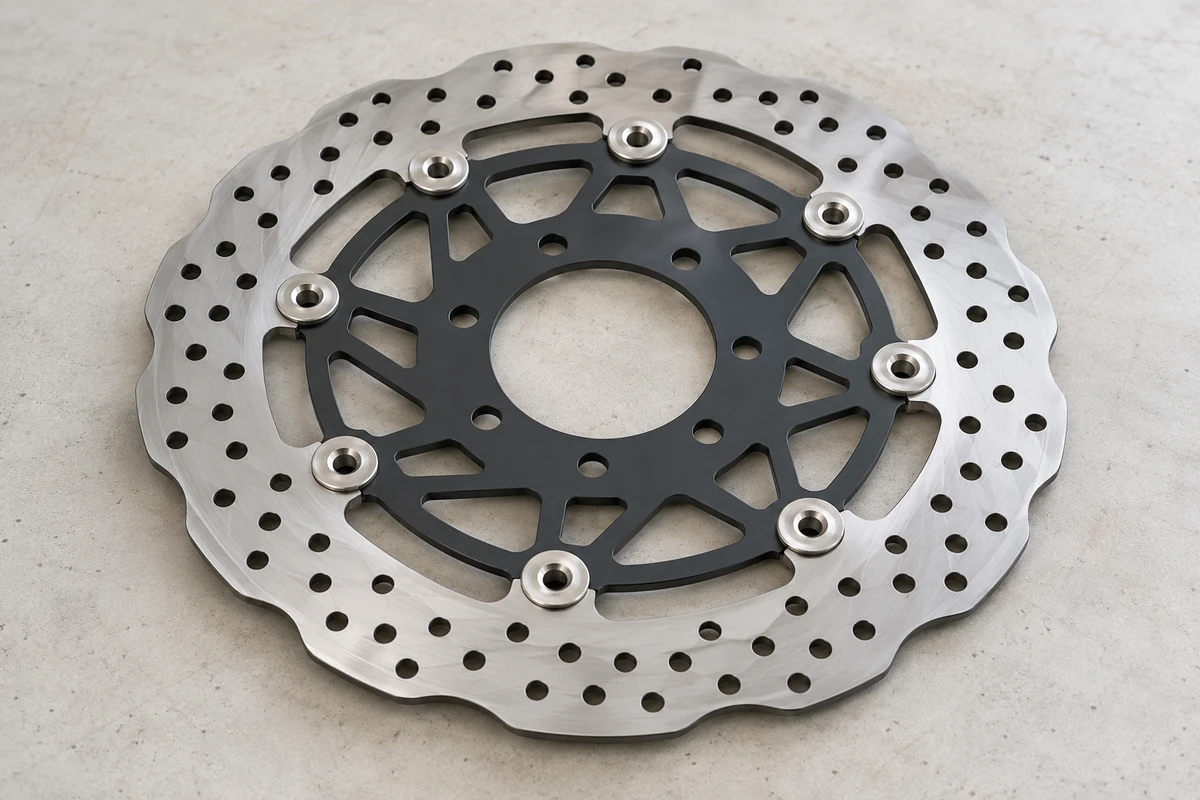
“It is a floating rotor” is an incomplete answer to a reported loose-joint concern. The supplier needs to address the identified rotor design, the actual reported movement and the evidence already available. A receiving buyer should not decide that every movement is normal merely because the product carries a floating label.
This guide addresses a post-arrival button or joint question. It does not define allowable float, prescribe a hand-force test or approve a rotor for braking use.
Establish which design the explanation describes
Start with the full ordered reference and the delivered rotor identity. Ask the supplier to provide the applicable description of its button or joint construction. A general diagram of a floating disc is not necessarily a description of the actual product, especially when the offered item is an independent aftermarket alternative.
Record the source and revision of the design evidence. If the supplier uses another manufacturer’s product page to explain its own rotor, ask how that reference applies. A comparable-looking joint does not establish identical construction or a transferable tolerance.
The buyer’s job is to connect the question to the correct technical owner. Purchasing should not select an allowable movement from the most reassuring online discussion or use a similarly shaped rotor as an acceptance gauge.
Keep EBC’s example bounded to its named construction
EBC’s X and XC floating-rotor page distinguishes the design’s thermal-expansion movement from loose sideways movement of blades or buttons. That is a statement about the named EBC construction, not a universal definition of acceptable movement for every floating disc. EBC X and XC floating rotors
The useful receiving lesson is to require design-specific meaning. Do not turn the page into instructions to push or pull a delivered rotor, repeat its promotional performance guarantees, or use it to approve an unknown manufacturer’s joint. The applicable maker or responsible competent provider must interpret the actual observation.
Preserve the original report and its limits
Record whether the concern came from an existing unpacking account, a receiving photograph, a pre-dispatch supplier video or an authorized specialist report. Keep the reporter’s actual description of direction and location. If “sideways” is ambiguous, ask the reporter to identify the referenced view in existing evidence rather than inventing a technical axis.
A still image may locate the joint but cannot prove movement. A video may show an event while leaving the applied force and method unknown. Record these limits explicitly. Do not estimate a tolerance from pixels or ask staff to demonstrate looseness repeatedly for a better recording.
Keep any transport-condition evidence separate. A marked box does not prove how a joint concern arose, and an intact box does not settle the rotor’s condition. Preserve the chronology without diagnosing transit damage from coincidence.
Buyer worksheet
Use one record per identified unit or clearly defined affected group. This is an original purchasing aid, not a test procedure or acceptance standard.
| Field | Record to preserve | Question that remains open |
|---|---|---|
| Rotor reference | Exact order, delivered designation and unit record | Unidentified aftermarket construction |
| Button design source | Applicable maker document and revision | Generic floating-disc explanation used for another design |
| Reported direction | Original wording linked to an existing view or report | Ambiguous axis or unverified movement amount |
| Observation method | Reporter, occasion and available evidence | Unspecified force or a still image treated as a motion test |
| Transport condition | Separate existing packing observation and chronology | Unproven cause of the joint concern |
| Technical response | Unit-specific issuer, assessment basis and restrictions | General reassurance substituted for disposition |
Make the supplier answer the particular concern
Request confirmation of the exact design, the applicable assessment basis and the response to the identified observation. If further inspection is proposed, ask who will perform it and under what competent, authorized scope. This article does not supply that physical method.
A response that merely defines floating rotors should be recorded as general background. It becomes a relevant disposition only when the responsible party connects its conclusion to the actual unit and concern, with any restrictions preserved. Do not delete the original report after a seller sends a reassuring product description.
When a supplier says a production revision changed the joint, request the revision and its applicability to the delivered batch. Keep the question of whether that revision was authorized for the order separate from the question of the actual joint’s condition.
Fictional example: the word floating does not finish the reply
Suppose an existing report for fictional rotor R-08 describes movement at one identified joint using a particular image orientation. The seller responds “fully floating” and sends a broad catalogue page. No actual test, defect or supplier is represented by this illustration.
The buyer asks the seller to identify R-08’s exact construction and obtain a response addressing the reported joint and direction. It does not direct the receiver to apply more force or install the disc to see whether braking feels normal. Until the applicable assessment arrives, the specific condition question remains open.
If the seller offers replacement before the technical question is resolved, preserve that as a commercial proposal. Identify the replacement separately and carry forward the required receipt evidence. A remedy can be agreed without pretending the buyer has diagnosed the original joint or validated the new rotor.
Record a disposition without broadening it
The final record should name the product, evidence reviewed, issuer and precise scope of the response. “Supplier supplied design document; reported joint condition awaits competent assessment” is a usable status. “All float is normal” is not.
Do not combine this joint record with rotor runout, mounting geometry or finish-zone decisions. They require different evidence. Keeping the button concern distinct makes the next supplier answer easier to evaluate and prevents one explanation from clearing unrelated brake questions.
Keep the request tied to the received item
Use the Motorcycle parts category for product context and the Motoparts sourcing request for the exact received reference and unresolved supplier question. Motoparts provides independent aftermarket and unbranded buying coordination and supplier negotiation. The manufacturer example above is documentary evidence, not a branded-goods offer, affiliation, inspection-service promise or engineering approval.
The sourcing form supports a supported-marketplace HTTPS link, an 8–1200-character description, or one or more screenshots. Image limits are five PNG, JPEG, WebP or GIF files, 10 MiB per file and 20 MiB combined. It does not accept PDF, CAD or ZIP uploads. Arrange other technical files only through a separately agreed, authorized exchange.
Frequently asked questions
Does a floating label make any rotor looseness acceptable?
No. Require the actual design documentation and a response to the reported joint concern. The EBC example is specific to its named X and XC construction and cannot supply a universal tolerance.
Should I push the buttons to compare movement?
This worksheet provides no force test. Preserve the existing observation and its method, and leave any additional physical assessment to an appropriately competent provider under an agreed scope.
Can a photograph verify the amount of float?
A photograph can locate the reported feature, but it does not establish a movement amount, applied force or acceptable limit. Record what the evidence actually shows and what remains unknown.
What if the supplier offers another rotor immediately?
Record the proposed remedy and the replacement identity separately. Replacement does not diagnose the original concern or establish that the new rotor is technically accepted; its own receipt and assessment requirements still apply.
Sources
Discuss a sourcing request related to this article.Floating Rotor Receipt: Request a Design-Specific Answer