
Chain Model Changes: Rebalance the Spare-Link Pool
Tie spare-link purchases to the chains actually installed during a model transition, preserving separate old and new link pools.
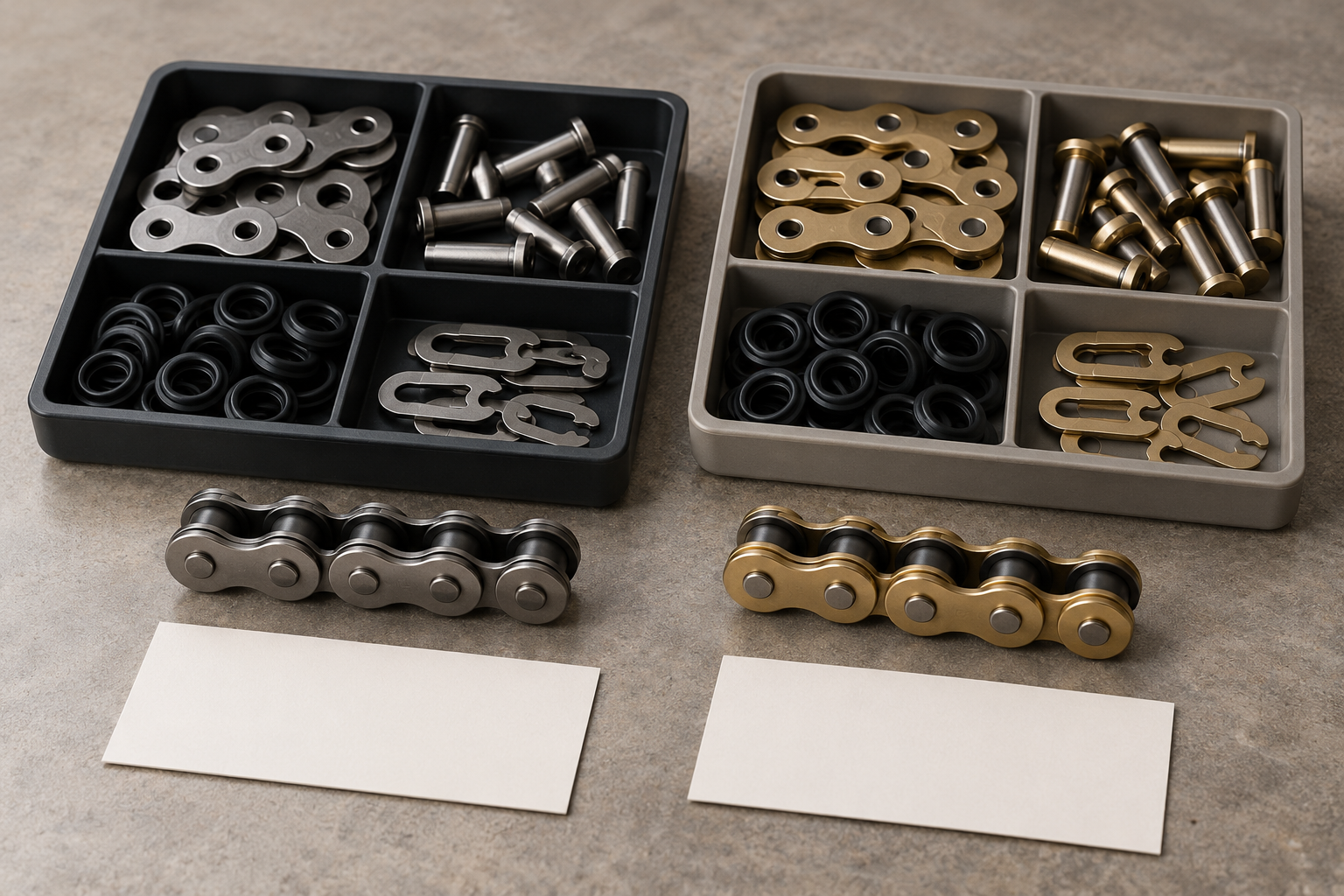
An approved change to a new chain model does not mean every motorcycle has already changed. During the transition, the spare-link pool must follow the actual installed populations, with each population tied to its own approved connecting-link reference.
This method starts after the technical chain/link relationships are established. It does not approve a chain conversion, select a link style or prescribe a spare-to-vehicle ratio.
Preserve chain-model boundaries through the transition
D.I.D states that connecting links are model-specific and are not interchangeable between chain models. Its FAQ also distinguishes OEM-chain spare enquiries from its aftermarket products. These are maker-specific statements, not evidence that Motoparts can obtain an original link. D.I.D model-specific link guidance
For each installed population, retain chain maker, full model and exact approved link reference. Nominal size is not the pooling key. An old and a new model can share a size label while still requiring separate link inventories under the applicable maker evidence.
Separate permission to change from completed changes
Use attributable installation or configuration records to identify completed changes. Keep approved-but-pending conversions in a separate scenario, not in the actual new-model population. Otherwise a buyer may stop supporting the old model before its installed chains have changed.
Where a vehicle's current chain model is unknown, keep its allocation unresolved. Do not force it into the new group because the transition deadline passed. Ask the accountable configuration owner to reconcile the record without directing physical investigation or service work from the purchasing worksheet.
Set the demand assumption explicitly
Installed counts describe the population; they do not by themselves specify how many spare links to buy. Ask the owner to define the approved spare requirement or event-specific demand for each population, including its planning period. Keep that assumption separate from the factual installed count.
Apply eligible model-specific link stock once. Do not pool ten old-model links and two new-model requirements into a satisfied total. Keep old-stock commitments visible until an authorized commercial change is confirmed; a planned technical transition does not cancel an accepted order.
Fictional example: a partial conversion
A fictional fleet record confirms eight units still carrying model A and two carrying model B after an approved transition began. The owner has separately set a planning requirement of three A links and two B links. These invented quantities are not a recommended ratio.
There are ten eligible A links and no B links. The current plan has no A shortage and a two-link B shortage, leaving seven A links outside this selected demand. Shared nominal chain size cannot make two of those seven into B coverage.
If three more units later have documented completed changes, update the installed populations and obtain the owner's revised demand scenario. Do not automatically scrap the A remainder or carry the previous spare quantities forward unchanged. The useful output names supported purchases, unallocated stock and the next configuration fact that would change the decision.
Reorder worksheet
Use this original purchasing aid with the actual approved records. It does not supply a test, installation method or technical acceptance.
| Field | Record and decision basis |
|---|---|
| Installed chain model | Current installed maker/model supported by a configuration record |
| Converted units | Completed changes with dates and accountable source |
| Units still on old model | Actual old-model population, separate from conversion plans |
| Approved link reference | Exact accepted link reference for each model |
| Eligible link stock | Eligible stock kept in model-specific pools |
| Transition demand assumption | Owner-selected demand basis, horizon and revision trigger |
Request the identified replenishment
See Motorcycle parts for category context. In a Motoparts sourcing request, identify the approved product, outstanding quantity and exact supplier question. Motoparts provides independent aftermarket and unbranded buying coordination and supplier negotiation. Named manufacturer examples are documentary references, not branded supply offers, affiliations or evidence of another supplier’s capability.
The initial form supports a supported-marketplace HTTPS link, an 8–1200-character description or screenshots. Image limits are five PNG, JPEG, WebP or GIF files, 10 MiB each and 20 MiB combined. PDF, CAD and ZIP files require a separately agreed authorized exchange. A request supplies no engineering approval, guaranteed saving or delivery commitment.
Frequently asked questions
Does approving a new chain model eliminate old-link demand?
No. Track actual completed changes and the remaining installed old-model population. The owner’s spare requirement may still include old-model links while those chains remain supported.
Can chain size be used to pool the two inventories?
No model interchange is established by nominal size. Keep the full chain and approved link relationship. D.I.D explicitly distinguishes connecting links by chain model.
How many spare links should each motorcycle have?
This article sets no ratio. Obtain an owner-approved demand or spare scenario for the actual population and period. Installed counts are factual inputs, not a universal stocking recommendation.
What should happen to surplus old-model links?
Keep them identified with their remaining supported uses and commitments. Ask the authorized owner for the next disposition or purchasing decision. A transition plan does not authorize disposal, relabeling or cross-model use.
Sources
Discuss a sourcing request related to this article.Chain Model Changes: Rebalance the Spare-Link Pool