
CV Boot Kit Packing: Keep Supplied Grease in Its Container
Separate a cosmetic kit-pouch redesign from a proposed transfer of supplied grease. Preserve container provenance while the qualified provider reviews any change.
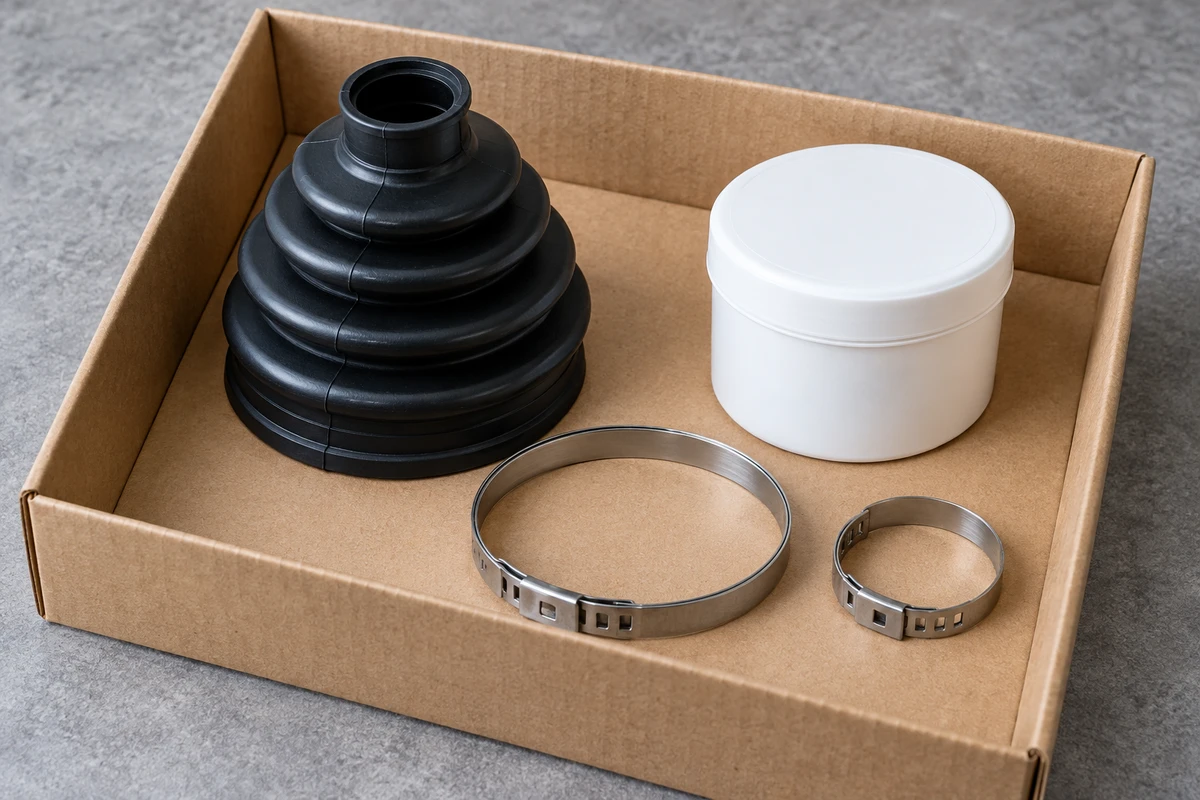
A request for matching accessory pouches can conceal a materially different action: opening a supplied grease container and transferring its contents into another one. Do not treat that as ordinary label or pouch standardization. Identify the proposed transfer before approving the CV boot kit presentation.
This article reviews container-change authorization and provenance. It does not select grease, specify an amount, describe decanting or make a transport classification. The kit's application and approved supplied contents should already be established.
Identify the grease supply actually accepted
All Balls Racing's CV boot range describes supplied grease alongside the boot and clamps. The range statement, checked on 14 October 2026, establishes that grease can be part of that named kit supply. It does not identify a container format or exact quantity for every SKU. All Balls CV boot kits
Ask the actual provider for the accepted kit reference, grease identity and supplied-container record. Preserve the provider's own identifiers and any relevant documentation already attached to that supply. Do not invent a sachet size, a grease grade or a hazard status because the public range mentions grease.
Distinguish a new outer pouch around the existing container from a replacement for the container itself. The first may leave the substance untouched. The second introduces an opening and transfer operation with additional questions that a cosmetic layout approval cannot answer.
Ask what the standardization proposal requires
Request a plain description of the proposed change: which container would be opened, who proposes to perform the work, what new container is proposed and which qualified provider would authorize the actual scope. These are questions to obtain an accountable proposal, not instructions for performing it.
Keep substance identity and container identity in separate fields. A statement that the grease remains the same does not establish the suitability of a new container, preservation of required information or acceptability of the proposed process. Likewise, a visually matching pouch does not prove that its contents remain attributable to the original kit supply.
If the objective is only consistent appearance, ask whether an appropriate provider-supported outer presentation can retain the supplied container unchanged. Do not promise that this option is available or that it resolves all packing or transport questions. It is an alternative scope to request before accepting an unnecessary transfer.
Fictional example: matching pouches erase the source container
Imagine fictional boot kit B-33 supplied with grease in identified container G-33. A retail proposal specifies one pouch style for clamps and another matching pouch for grease. The provider's note says the grease will be transferred from G-33. All references and events are invented.
The buyer separates the two decisions. Re-presenting a closed clamp packet is one proposal; transferring the grease is another. Approval of the visual pouch family covers neither the substance transfer nor a new container's suitability.
Suppose the packer says the new pouch will carry the same kit name. That label does not preserve the complete source-container provenance or establish the transfer's acceptability. Request the qualified provider's disposition and keep the transfer unapproved pending that answer.
If the transfer has already happened, record the actual changed state and any surviving source records. Do not label the new pouch as the untouched original supply. The appropriate provider must determine what evidence or resolution is needed; this article supplies no recovery or repacking procedure.
Use a container-change review record
This is an original purchasing worksheet, not a technical standard or an instruction to handle the product.
| Review field | Record or request |
|---|---|
| Approved kit | Accepted reference and grease-inclusion record |
| Grease source container | Actual supplied container and issuer identity |
| Identity record | Available product and container documentation |
| Proposed transfer | Exact change, distinguishing outer presentation from opening |
| Qualified provider decision | Attributable authority, limits and unresolved questions |
| Untouched supply option | Provider response on retaining the original container |
Retain the distinction between a proposed action, an authorized scope and an actual completion declaration. A provider's willingness to consider a change is not evidence that it was approved or performed. An attractive mockup is not evidence of the contents' identity.
If the provider needs a substance or transport specialist, give that reviewer the real available documentation through the agreed authorized exchange. Keep missing records visible. Neither a small quantity nor a familiar product name permits the buyer to infer shipping classification or acceptance.
Close only the approved presentation scope
The final record should say whether the original grease container remains untouched in the selected presentation or whether a separately authorized change applies. Preserve the precise limits and unresolved questions of any returned disposition.
A pouch redesign should not become an undocumented transfer of a supplied substance. The useful buyer outcome is clarity about which operation is proposed and who can decide it, while actual handling, technical acceptance and route requirements remain with their responsible providers.
Bring the exact change into the sourcing request
See ATV parts for product context. A Motoparts sourcing request should identify the accepted product, the proposed packing change and the unanswered decision above. Motoparts provides independent aftermarket and unbranded buying coordination and supplier negotiation. Named manufacturers are documentary examples, not branded-supply offers, affiliations or evidence of another provider's capability.
The initial form supports a supported-marketplace HTTPS link, an 8–1200-character description or screenshots. It accepts up to five PNG, JPEG, WebP or GIF images, at most 10 MiB each and 20 MiB combined. PDF, CAD and ZIP files require a separately agreed authorized exchange. The form is not a technical-file portal; a request does not establish engineering approval or a specialist packing service.
Frequently asked questions
Can supplied grease be moved into a matching kit pouch?
Treat that as a separate container-transfer proposal. Obtain the exact scope, substance and container records, and the appropriate qualified provider’s decision. A cosmetic pouch approval does not authorize opening or transferring the grease.
Does the All Balls range page identify the grease container?
No container format or exact per-SKU quantity is established by the bounded statement used here. Obtain those details for the actual accepted kit. Do not infer a sachet, tube or amount from the product family.
Is an outer pouch around the existing container the same change?
No. Describe whether the original container remains untouched or is replaced. The actual outer arrangement still needs its appropriate review, but it should not be confused with a substance-transfer operation.
Does keeping the original container settle shipping classification?
No. It preserves a supplied-state reference but does not establish route acceptance or classification. Give the responsible specialist the actual product and substance records; this article makes no dangerous-goods determination.
Sources
Discuss a sourcing request related to this article.CV Boot Kit Packing: Keep Supplied Grease in Its Container