
AGM Battery Receipt: Reconcile the Activation State
Compare the ordered AGM supply state with delivered identity, existing seal records and activation provenance without charging or opening the battery.
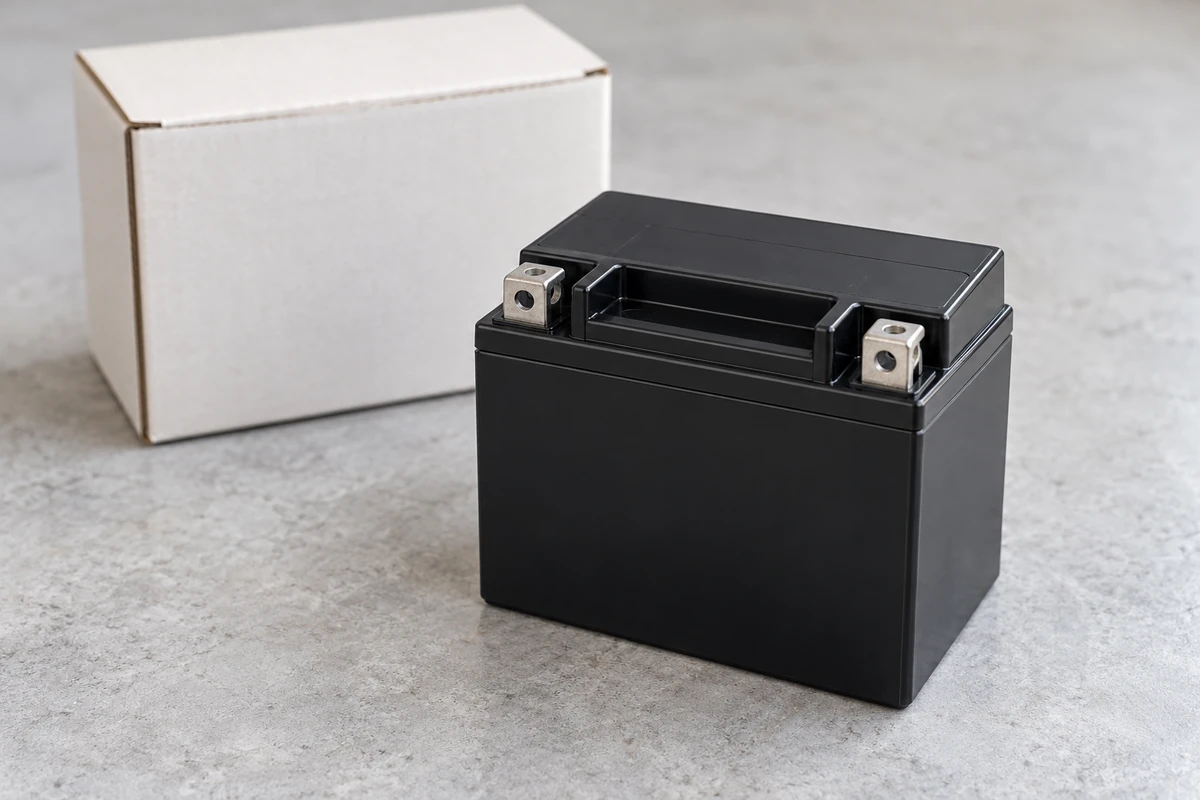
The words “new AGM battery” do not answer whether the order required factory-activated stock or a bottle-supplied product. A receipt record should preserve that distinction and identify any unexplained change before the buyer closes the supply-state question.
This is a document-reconciliation guide for an already identified battery. It gives no activation, charging, electrolyte-handling or electrical-test instructions. A possible hazard takes priority over this paperwork: use the site’s established qualified response rather than seeking extra observations to complete a form.
Start with the exact ordered state
Retain the full battery reference, the accepted quotation and the final order line. Record the agreed state in the supplier’s exact terminology and identify the document defining it. Keep a factory-activated requirement separate from a claim that a seller activated the item before dispatch.
If the order says only AGM, the missing supply-state definition must remain visible. Purchasing should ask what was agreed and what was actually supplied, without retrospectively inventing a requirement from a photograph or the expected delivery date.
Where a supplier changed the product state before dispatch, ask who authorized that change and which units it affected. An internal dispatch decision does not automatically amend the buyer’s order. Equally, an incomplete description is not sufficient evidence to accuse the supplier of mishandling the battery.
Bound the manufacturer’s terminology
Yuasa’s guide distinguishes Factory Activated and Bottle Supplied AGM batteries. It describes the former as filled, sealed and charged at the factory, and the latter as supplied dry with a separate electrolyte container. It also makes the intact foil seal relevant to the unactivated state. These observations concern Yuasa’s described products; they are not a universal inspection or storage-life rule. Yuasa AGM supply-state guide
Use that example to ask a more exact question of the actual supplier. Do not apply Yuasa abbreviations to another maker without its documentation, transfer a shelf-life statement, or derive a charge requirement from this article. The appropriate technical owner must establish the exact product’s instructions and permitted next step.
Preserve existing seal information without disturbing it
Record what the existing receiving evidence actually shows and when it was created. A dispatch image, an arrival image and a supplier’s later explanation have different evidential roles. Keep them in sequence rather than replacing the arrival observation with the newest document.
Do not remove a foil strip, open a container, remove caps or inspect internally to answer the state question. If a seal’s condition was not safely documented within the authorized receipt scope, enter “not established.” An administrative record can remain incomplete while the responsible qualified provider determines what is appropriate.
An apparently opened seal is an observation requiring context. It does not tell purchasing who opened it, when that occurred, or whether a complete authorized activation process was performed. A filled-looking or sealed-looking exterior also does not establish charge condition or suitability for service.
Buyer worksheet
Use one record per identified unit or clearly defined affected group. This is an original purchasing aid, not a test procedure or acceptance standard.
| Field | Record to preserve | Question that remains open |
|---|---|---|
| Battery reference | Full order and delivered identity from existing records | Exact model and unit association |
| Ordered state | Accepted terminology and controlling order revision | Factory activation versus later supplier activation |
| Declared activation party | Actual supplier answer and supporting record | Who performed any state-changing work |
| Existing seal record | Evidence reference, observation time and limits | No opening or internal investigation to fill blanks |
| Activation documentation | Unit-linked declaration, authorization and separately labeled dates | Missing history or unsupported changed wording |
| Qualified decision | Responsible provider, actual instruction and commercial owner | Technical release distinct from order reconciliation |
Ask for activation provenance rather than a new date label
Request the supplier’s declaration of whether the unit was activated and, if so, by whom, under what authorized scope, and with what unit-linked record. Preserve the actual response, including any information the supplier cannot establish. Do not convert “prepared before shipment” into “factory activated” without evidence.
Keep manufacturing, dispatch, delivery and any declared activation dates in separately labeled fields. A carrier delivery timestamp proves a delivery event, not activation history. If a revised invoice changes the supply-state wording, link that revision to the original discrepancy and retain the earlier document.
The commercial owner can discuss a documented replacement or other proposed resolution. Technical readiness, permitted handling, transport acceptance and installation remain separate matters for the appropriate providers. No refund or replacement entitlement is inferred here; the actual agreement and applicable process control the commercial outcome.
Fictional example: delivery time cannot fill the history gap
Consider fictional order B-04 for bottle-supplied stock. An existing arrival record shows an unexplained opened foil strip, while the seller supplies only a dispatch date and says the unit is new. These are invented details, not a diagnosis or an account of an actual incident.
The buyer keeps the state discrepancy open and asks for the actual activation declaration and authorized change record. It does not tell receiving staff to activate the battery, test its voltage or obtain a closer view of an uncertain condition. The supplier’s newness claim does not reconstruct the missing history.
If the seller later confirms that a named service provider activated the unit, that answer clarifies provenance. It does not automatically satisfy an order for bottle-supplied stock or establish technical release. The buyer records the proposed commercial resolution and refers the actual state to the qualified decision owner.
Use narrow closure language
State which documents were reconciled, which unit they concern and who issued the decision. “Supplier activation declaration received; ordered-state discrepancy awaiting buyer resolution” preserves more meaning than “battery accepted.” Keep any technical conditions intact when recording a later qualified response.
The receiving file is complete when its facts, limits and responsible next steps are clear. It does not need to contain an invented technical conclusion to be useful.
Keep the request tied to the received item
Use the Motorcycle parts category for product context and the Motoparts sourcing request for the exact received reference and unresolved supplier question. Motoparts provides independent aftermarket and unbranded buying coordination and supplier negotiation. The manufacturer example above is documentary evidence, not a branded-goods offer, affiliation, inspection-service promise or engineering approval.
The sourcing form supports a supported-marketplace HTTPS link, an 8–1200-character description, or one or more screenshots. Image limits are five PNG, JPEG, WebP or GIF files, 10 MiB per file and 20 MiB combined. It does not accept PDF, CAD or ZIP uploads. Arrange other technical files only through a separately agreed, authorized exchange.
Frequently asked questions
Does AGM identify the battery activation state?
No. Preserve the exact product and its documented supply state. The Yuasa example distinguishes Factory Activated and Bottle Supplied products, but another maker requires its own terminology and instructions.
Does an opened foil seal prove the battery was correctly activated?
No. An existing seal observation does not establish who performed work, when it occurred or what process was completed. Ask for product-specific activation provenance without disturbing the battery to investigate.
Can a dispatch date stand in for an activation record?
No. Keep dispatch and any declared activation event separately labeled. A date attached to shipping documentation cannot establish an undocumented change in product state.
Should receiving staff charge the battery to settle the disagreement?
No charging or electrical testing is authorized by this worksheet. Refer the exact product and discrepancy to the qualified owner. If a possible hazard interrupts routine work, follow the site’s established response rather than pursuing more evidence.
Sources
Discuss a sourcing request related to this article.AGM Battery Receipt: Reconcile the Activation State