
Spark Plug Receipt: Build a Traceable Origin Query
Preserve plug-to-package links, purchase records and specific inconsistencies for an origin review without declaring authenticity from appearance.
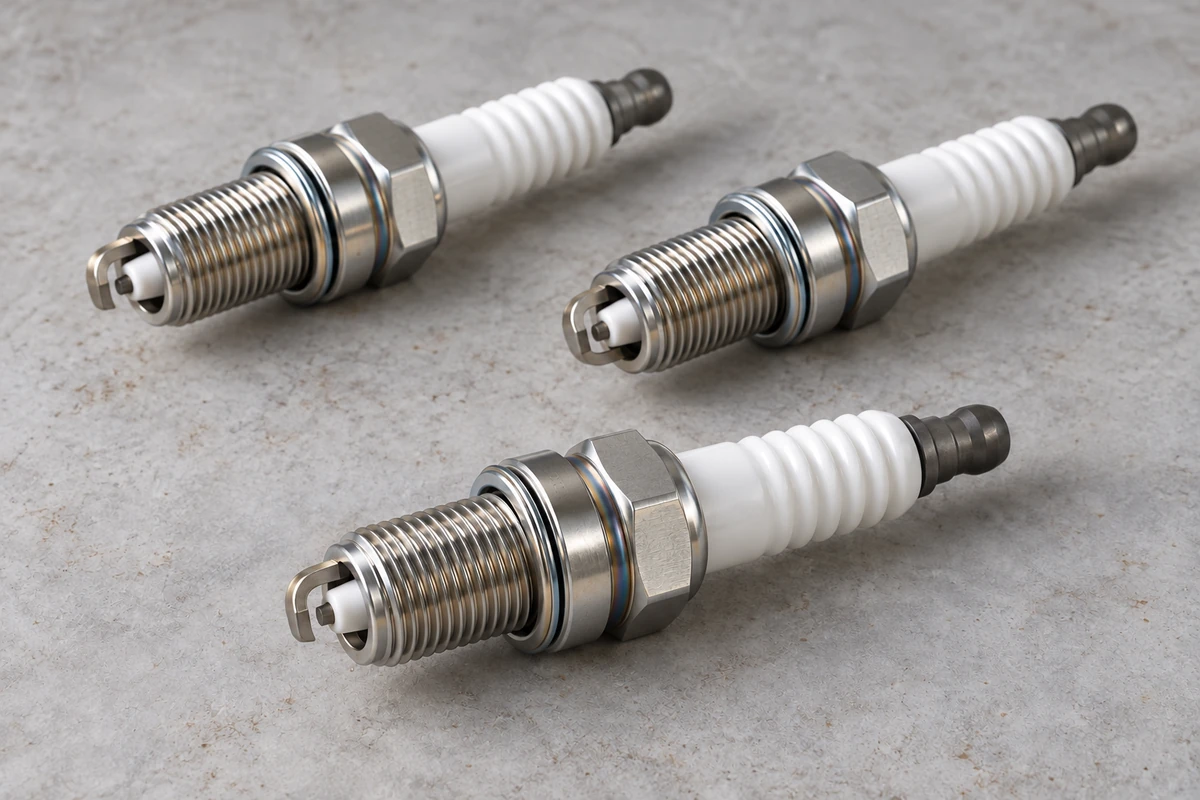
A spark plug that resembles a catalogue photograph still needs a traceable origin record when the delivered unit raises a specific concern. Keep the plug, associated packaging and purchase documents linked in the receipt file, then prepare a factual query for the legitimate maker or responsible supplier.
This is an origin-evidence guide. It does not authenticate a product, accuse a seller, select a heat range or assess ceramic impact damage. A plug’s possible application and its actual origin are separate questions.
Define the origin question before collecting more evidence
Identify what is inconsistent: an unclear lot record, a package-to-unit mismatch, a changed seller declaration or another specifically documented observation. Preserve the original wording and available images. “Origin not established from the supplied records” is a more accurate status than “fake” when no competent determination has been made.
Keep the complete received designation and declared maker separate from the buyer’s internal unit ID. A shorthand stock name can hide which product the query concerns. If several plugs arrived in one shipment, avoid grouping them under one conclusion unless the actual evidence and later response cover that group.
The buyer should also retain the original advertised claim. A later listing edit may explain a changed description, but it should not replace the record of what was ordered. Save only relevant purchase evidence; unrelated personal or payment information is not needed to identify the product question.
Bound the historical manufacturer example
Niterra’s EMEA article, published in February 2019, describes a counterfeit CR9EIX example in which a modified electrode visually resembled the genuine design. It shows why superficial similarity can mislead. It is not a universal authentication algorithm for every plug or every production period. Niterra’s historical CR9EIX origin example
Do not transfer the article’s pictured details to another product and declare a match or failure. The actual maker must determine which current reference and review process apply to the received item. This article makes no claim that Motoparts supplies the branded product or is authorized to authenticate it.
Preserve package-to-unit association
Record which package belonged to which unit when that relationship was still known. An existing whole-package view and associated plug view can help the reviewer understand the record. If packages were mixed after opening, state that limitation instead of recreating a confident association from similar labels.
Keep visible codes exactly as recorded. Distinguish a printed package code, a product marking and a purchase-order number rather than treating them as interchangeable lot evidence. An unreadable character should remain unreadable until a reliable source resolves it.
Do not remove material, scrape markings, dismantle the plug, conduct a burn test or run it in an engine to investigate origin. A receiving query should preserve evidence, not create an improvised materials experiment or expose equipment to an unresolved item.
Buyer worksheet
Use one record per identified unit or clearly defined affected group. This is an original purchasing aid, not a test procedure or acceptance standard.
| Field | Record to preserve | Question that remains open |
|---|---|---|
| Received unit | Complete marking, declared maker and internal receipt ID | Shorthand description without exact identity |
| Packaging association | Original unit-to-package relationship and existing images | Mixed packages reconstructed as certain |
| Purchase chain | Actual invoice seller, order reference and documented intermediaries | Authorized-dealer status inferred from a logo |
| Observed inconsistency | Specific record conflict or unreadable feature | Suspicion promoted to a counterfeit accusation |
| Applicable maker reference | Current exact-product review basis requested from official source | Historical example used as universal authentication |
| Authentication response | Issuer, exact wording, covered units and limitations | Acknowledgment or package-style answer treated as complete proof |
Assemble a query the recipient can answer
The query should identify the exact product claim, seller record, affected unit or defined group, and observed inconsistency. Ask which evidence the legitimate maker or responsible supplier requires for its review. Use a verified official contact route and share only the necessary records through an authorized exchange.
Do not presume that a manufacturer can authenticate every item remotely or promise a response time. If it says the available evidence is insufficient, retain that answer and the specific missing information. A message acknowledging receipt is not an authentication conclusion.
Keep the supply chain record factual. Record the seller shown on the invoice, the listing or order reference and any documented intermediary. Do not infer an authorized-dealer relationship from a logo or a seller’s unsupported description. Likewise, an unfamiliar seller name alone does not prove counterfeit origin.
Fictional example: a similar electrode with an unresolved lot record
Suppose fictional plug P-12 resembles a catalogue image, but the received unit cannot be reconciled with its associated lot documentation. The seller sends another catalogue photograph as reassurance. This scenario is invented; it is not a warning about any real seller or batch.
The buyer records the resemblance as limited visual context and asks for a response to P-12’s origin discrepancy. It does not turn the photograph into proof of authenticity. It also avoids posting a public accusation based on the incomplete record.
If the legitimate maker later responds about one specific feature only, preserve that scope. Confirmation that a package style existed does not automatically authenticate every item in that packaging. A full origin determination, if supplied, should remain attributed to its issuer and affected product scope.
Record the actual outcome
Possible administrative outcomes include a supplier document received, an origin review pending, an evidence limitation identified or a proposed return arrangement. Keep any determination precisely attributed and retain the original inconsistency alongside the response.
Commercial resolution, product origin and application suitability need separate records. Even a confirmed origin would not establish that the plug is correct for an engine. A well-built query narrows uncertainty without manufacturing either reassurance or an accusation.
Keep the request tied to the received item
Use the Motorcycle parts category for product context and the Motoparts sourcing request for the exact received reference and unresolved supplier question. Motoparts provides independent aftermarket and unbranded buying coordination and supplier negotiation. The manufacturer example above is documentary evidence, not a branded-goods offer, affiliation, inspection-service promise or engineering approval.
The sourcing form supports a supported-marketplace HTTPS link, an 8–1200-character description, or one or more screenshots. Image limits are five PNG, JPEG, WebP or GIF files, 10 MiB per file and 20 MiB combined. It does not accept PDF, CAD or ZIP uploads. Arrange other technical files only through a separately agreed, authorized exchange.
Frequently asked questions
Can a catalogue-photo match prove a spark plug is genuine?
No. Similarity is limited visual evidence. Keep the exact unit, packaging and purchase chain together and seek the applicable maker or responsible supplier review of the specific origin question.
Can the 2019 CR9EIX example authenticate another plug model?
No. It is a historical, model-specific example. Do not apply its pictured features as a universal pass/fail checklist for another model, region or production period.
Should I test the electrode material myself?
No destructive, burn, engine or improvised material test is provided here. Preserve the received evidence and follow the appropriate official review process for the actual product.
What if the manufacturer confirms only the package style?
Record that narrow statement and its scope. A package-style answer does not necessarily authenticate the contained unit or other units in the delivery. Keep the remaining origin and application questions visible.
Sources
Discuss a sourcing request related to this article.Spark Plug Receipt: Build a Traceable Origin Query